The roar of the Mach 5 engine, the blur of impossible speed, and the unwavering resolve of a young man in a white helmet – for decades, these images have cemented Speed Racer's place in popular culture. Its journey from a groundbreaking Japanese anime to a live-action spectacle and animated revivals showcases a fascinating legacy and invites insightful comparisons across diverse media. This isn't just a story about fast cars; it's a testament to the enduring appeal of family, competition, and a unique visual style that continues to influence creators worldwide.
At a Glance: Key Takeaways from the Speed Racer Saga
- Pioneering Animation: The original 1967 Speed Racer (née Mach GoGoGo) was instrumental in introducing Japanese animation to a global audience, setting a high bar for action and storytelling.
- Visual Evolution: From hand-drawn cel animation to hyper-stylized CGI in the 2008 film and Flash animation in The Next Generation, the franchise has always pushed visual boundaries.
- Timeless Themes: Across all iterations, the core themes of family bonds, the pursuit of justice, and the thrill of competitive racing remain central, resonating with successive generations.
- Iconic Characters & Vehicles: Speed Racer, Trixie, Pops, the mysterious Racer X, and the versatile Mach 5 are instantly recognizable, forming the bedrock of the franchise's identity.
- Adaptation Challenges & Successes: Each new version grapples with balancing nostalgic homage with fresh interpretations, leading to varying critical and commercial outcomes that highlight the complexities of adapting beloved IP.
- Continuing Relevancy: With a new live-action series reportedly in development for Apple TV+, Speed Racer's engine is far from running out of gas, proving its sustained cultural impact.
The Starting Grid: Genesis of a Global Phenomenon
Before it became a household name in the West, Speed Racer began its journey as Mach GoGoGo in Japan in 1967, a manga series by Tatsuo Yoshida. Soon after, Tatsunoko Production brought it to life as an anime, a vibrant, high-octane spectacle that captured the imagination. When it was licensed and dubbed for American audiences, it shed its original name for the more direct Speed Racer, a title that would echo through generations.
From Mach GoGoGo to American Icon: The 1967 Anime
This original animated series was nothing short of revolutionary. It dropped viewers directly into a world of futuristic, gadget-laden racing where the stakes were often life or death. At its heart was Speed Racer, a young, determined driver with an unparalleled skill behind the wheel of his magnificent Mach 5. Equipped with features like auto-jacks, a deflector, and even rotary saws, the Mach 5 wasn't just a car; it was a character in itself, capable of tackling any terrain or foe.
Beyond the thrill of the race, the series wove in compelling family drama, notably through Speed's relationship with his gruff but loving father, Pops Racer, his supportive girlfriend Trixie, and his mischievous younger brother Spritle and his chimp Chim-Chim. However, the most captivating element for many was the enigmatic Racer X, a masked competitor whose mysterious connection to Speed fueled countless theories and added a layer of intrigue that transcended typical Saturday morning cartoons.
Speed Racer wasn't just entertainment; it was a cultural ambassador. It proved the global viability of Japanese animation, laying groundwork for countless anime series that would follow. Its distinctive animation style, dynamic action sequences, and serialized storytelling were unlike anything most Western audiences had seen, marking a pivotal moment in the history of television and animation. Dive deeper into what made the original Speed Racer anime such a groundbreaking phenomenon.
Shifting Gears: The Live-Action Leap of 2008
Decades after its original run, Speed Racer made an ambitious leap to live-action cinema in 2008, helmed by the visionary Wachowskis. Known for their groundbreaking work on The Matrix, the directors brought their distinctive aesthetic and storytelling prowess to the beloved racing saga.
The Wachowskis' Vision: A Stylized Spectacle
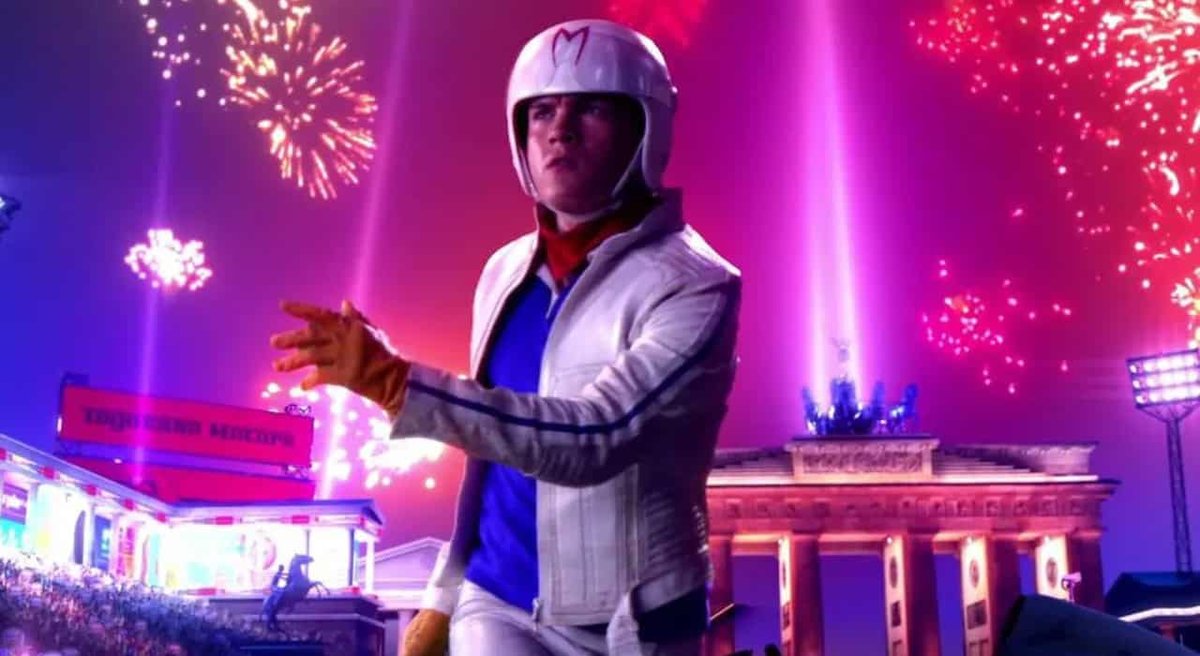
The 2008 Speed Racer film was a bold, unapologetic explosion of color and kinetic energy. Rather than attempting a gritty, realistic adaptation, the Wachowskis leaned into the source material's inherent cartoonishness, creating a hyper-stylized visual aesthetic that relied heavily on cutting-edge Visual Effects (VFX) and Computer-Generated Imagery (CGI). Every frame was meticulously crafted, resembling a vibrant comic book brought to life, with saturated colors and dynamic camera movements that mimicked the anime's exaggerated perspective.
Emile Hirsch embodied the titular hero, capturing Speed's earnest determination, while Christina Ricci brought a spirited intelligence to Trixie. John Goodman perfectly grounded the eccentric Pops Racer, adding warmth and humor to the family dynamics. The film was a feast for the senses, pushing technological boundaries to replicate the anime's impossible stunts and intricate gadgets.
Upon its release, the film was a significant box office disappointment, confusing some critics and audiences who expected a more conventional live-action adaptation. However, over time, its unique artistic vision and commitment to its source material's spirit have earned it a robust cult following. Many now appreciate it as a pioneering work in digital filmmaking and a truly original take on a classic. Get a full breakdown of the Wachowskis' Speed Racer film.
Comparing Aesthetic Approaches: Hand-Drawn vs. Digital Canvas
The contrast between the original anime and the 2008 film couldn't be starker, yet both remain authentically "Speed Racer." The 1967 anime's hand-drawn cel animation, with its limited frames per second, relied on dynamic lines, speed lines, and character poses to convey motion and emotion. It created a specific kind of visual language that felt both immediate and exhilarating.
The 2008 film, on the other hand, leveraged the full power of digital technology. Its CGI-heavy environments and vehicles allowed for fluid, impossible camera movements and a depth of field that brought the anime's fantastic world into a new dimension. While the anime had to imply speed, the film could literally render it with blur effects and intricate detail, transforming the flat, vibrant panels of a comic into a three-dimensional experience. This comparison highlights the broader evolution of visual storytelling in entertainment, especially in anime-to-live-action adaptations. Both approaches, despite their differences, captured the essence of high-octane racing and the futuristic world of Speed Racer, demonstrating that loyalty to source material can manifest in diverse visual forms.
The Next Lap: Reimagining for a New Generation
The Speed Racer universe didn't conclude with the Wachowskis' film. The year 2008 also saw the debut of Speed Racer: The Next Generation, an animated series developed by Lionsgate Television and aired on Nicktoons. This series aimed to introduce the iconic franchise to a new, younger audience while connecting to the established canon.
Speed Racer: The Next Generation - Passing the Torch
The Next Generation moved the narrative forward, focusing on X Racer (also known as Speed Jr.), the son of the legendary Speed Racer. X is a talented but troubled student at the prestigious Racer Academy, a place dedicated to training the next generation of racing champions. He's joined by a new cast of characters, including his best friend Conor, a brilliant mechanic, and Annalise Zazic, a gifted hacker. Together, they unravel mysteries, compete in dangerous races, and uphold the legacy of the Racer family.
Visually, the series adopted a contemporary style, utilizing Flash Animation and CGI to create a clean, modern look that differentiated it from both the original anime and the 2008 film. While the aesthetic was new, the core spirit of gadget-filled races, clear-cut good versus evil, and strong familial (or found-familial) bonds remained intact. X Racer, naturally, pilots his own advanced vehicle: the Mach 6, a worthy successor to his father's iconic ride.
This series successfully blended elements of the original canon with fresh storytelling, proving that the Speed Racer formula could be adapted and extended for new demographics without losing its essence. For a detailed exploration of its unique approach, check out our guide on the Speed Racer Next Generation cartoon.
Evolution of the Mach: From 5 to 6
Central to the Speed Racer legend is the Mach 5, Speed's technologically advanced, gleaming white race car. Designed by Pops Racer, it was a marvel of engineering, equipped with seven distinct gadget functions activated by buttons on its steering wheel, allowing Speed to overcome virtually any obstacle. The Mach 5 isn't just a vehicle; it's a symbol of innovation, determination, and ingenuity. Its sleek design and incredible versatility became instantly iconic, etched into the minds of fans globally.
When Speed Racer: The Next Generation introduced the Mach 6, it faced the monumental task of living up to its predecessor's legendary status. The Mach 6 was designed for a new era, reflecting advancements in automotive technology and animation style. While still packing an array of gadgets and boasting incredible speed, it presented a more angular, aggressive profile, indicative of modern racing aesthetics. Its existence demonstrated how the franchise intelligently evolved its iconic elements to remain relevant. Comparing the iconic Mach 5 car to the Mach 6 offers a fascinating look at how core design principles are updated while retaining a narrative throughline for the "world's greatest race car."
Enduring Thrills: What Keeps the Engine Running?
Despite varied interpretations and technological advancements, the fundamental appeal of Speed Racer has remained remarkably consistent. Its longevity isn't merely due to nostalgia; it's rooted in universal themes and unforgettable characters that transcend generations.
Timeless Themes: Family, Justice, and the Thrill of the Race
At its core, Speed Racer is a story steeped in universal values.
- Family: The Racer family forms the emotional backbone of the entire franchise. Pops' engineering genius and fierce protective instincts, Mom Racer's quiet strength, Trixie's unwavering support, Spritle and Chim-Chim's comedic relief, and Speed's dedication to his loved ones create a relatable, heartwarming dynamic. Even the estranged Racer X represents a powerful, albeit complicated, family tie. This emphasis on family cohesion and loyalty provides a strong emotional anchor for the adrenaline-pumping races.
- Justice: Many of Speed's races aren't just about winning; they're about exposing corruption, thwarting criminal organizations, or defending the innocent. Speed Racer embodies a pure sense of moral righteousness, using his racing prowess not for personal glory but to ensure fair play and justice prevails. This heroic quest adds significant weight to each dangerous competition.
- The Thrill of Competition: Ultimately, Speed Racer is a celebration of racing itself. The speed, the daring maneuvers, the futuristic tracks, and the high stakes are endlessly exciting. It taps into a primal human fascination with pushing boundaries, overcoming challenges, and the sheer spectacle of performance.
Iconic Characters: The Mystery of Racer X
While Speed Racer is the protagonist, the cast of supporting characters elevates the narrative. Trixie isn't merely a damsel in distress; she's often depicted as resourceful, piloting her helicopter to assist Speed and providing critical intelligence. Pops Racer is the engineering genius and moral compass, while Spritle and Chim-Chim offer comic relief, albeit sometimes at inopportune moments.
However, no character captures the imagination quite like Racer X. His masked identity, his incredible driving skills, and his constant, almost guardian-like presence at Speed's side, often saving him from certain doom, created a persistent air of mystery. The eventual revelation of his true identity (Speed's long-lost older brother Rex Racer) was a watershed moment for many viewers, deepening the family drama and adding layers to the franchise's emotional landscape. The intrigue surrounding the mystery surrounding Racer X perfectly illustrates the show's knack for character development and long-form narrative.
Looking Down the Track: The Apple TV+ Revival
The enduring appeal of Speed Racer ensures that its story continues to be told. The latest chapter is reportedly in development for Apple TV+, signaling a renewed interest in a live-action series. This project is being spearheaded by J.J. Abrams' Bad Robot Productions, with Ron Fitzgerald and Hiram Martinez serving as co-showrunners.
Bad Robot's New Vision
J.J. Abrams and Bad Robot are known for their blend of reverence for established franchises and a knack for reinvention, having successfully navigated properties like Star Trek and Star Wars. This background suggests a careful approach to Speed Racer, one that will likely respect the original anime's spirit while infusing it with modern production values and potentially a more mature storytelling sensibility suitable for a streaming platform.
The announcement of Fitzgerald and Martinez, both with experience in character-driven dramas, indicates that the new series might delve deeper into the family dynamics and the psychological aspects of competition and identity. The challenge will be to capture the original's vibrant, often campy, charm while making it palatable for contemporary audiences accustomed to complex narratives and high-end visual effects. Fans will be eager to see how this new live-action interpretation positions itself within the franchise's rich legacy and how it compares to its predecessors.
The prospect of a new series highlights Speed Racer's remarkable resilience. It's a testament to how certain narratives, characters, and even vehicles possess an archetypal quality that allows them to be successfully reinterpreted across different eras and mediums, continuing to resonate with new generations of fans.
Lessons from the Finish Line: What Speed Racer Teaches Us About Adaptation
The varied history of Speed Racer — from its anime origins to a big-budget film and a children's animated series, with a new live-action show on the horizon — offers invaluable lessons on the art and science of adapting a beloved franchise.
- Embrace or Reinterpret the Aesthetic: The original anime’s visual style was unique. The Wachowskis' film chose to embrace and exaggerate it, leading to a polarizing but ultimately unique cinematic experience. The Next Generation opted for a complete visual overhaul to appeal to a new demographic. There's no single "right" way, but a conscious decision about visual identity is crucial.
- Core Themes are Paramount: While superficial elements can change, the enduring themes of family, loyalty, justice, and the thrill of the race must remain. These are the narrative anchors that allow an adaptation to feel authentically Speed Racer, regardless of its stylistic choices.
- The Iconography Matters: The Mach 5 (or its successors), the distinct character designs (Speed's helmet, Racer X's mask), and even the sound effects are deeply ingrained in fan consciousness. Successful adaptations find ways to honor or creatively evolve these iconic elements without losing their recognition.
- Know Your Audience: The 2008 film struggled partly because its aesthetic was perhaps too niche for a wide theatrical release, yet it found its audience later. The Next Generation clearly targeted children. The upcoming Apple TV+ series will need to define its target demographic and tailor its tone and content accordingly.
- Innovation Doesn't Mean Abandonment: While new stories and new characters (like X Racer) can expand the universe, maintaining a clear connection to the original canon—whether through direct lineage or thematic echoes—is vital for satisfying long-time fans while inviting newcomers.
Ultimately, Speed Racer's journey through the decades shows that a powerful core concept, combined with memorable characters and a willingness to reinvent its presentation, can keep a franchise racing into the future, adapting to changing tastes and technological capabilities while remaining true to the spirit that made it iconic in the first place.
Your Turn Behind the Wheel
From the initial, hand-drawn exhilaration of the 1967 anime to the digital spectacle of the 2008 film, and the passing of the torch in The Next Generation, Speed Racer has never stopped pushing the limits of speed and storytelling. Its legacy and comparisons across different iterations offer a masterclass in adaptation, showing how a powerful narrative can evolve while staying true to its core.
Whether you're a long-time fan who remembers the Mach 5's gadgets by heart or a newcomer intrigued by the upcoming Apple TV+ series, there's a version of Speed Racer waiting for you. Revisit the original, explore the Wachowskis' vibrant vision, or dive into the adventures of Speed Jr. Each offers a unique perspective on a timeless tale of racing, family, and justice. So, buckle up, hit the gas, and experience the thrill for yourself.